We gather in the stillness and shadow of Christmas Midnight Mass to tell a story the world keeps trying to silence.
It is not a story of comfort or control. It is not a story about power winning through force. It is the story of a child born into danger, poverty, and political violence. A story of God choosing to be with those who are pushed to the edges.
Our lectionary opens Midnight Mass with words that feel almost too familiar to a weary world: “The people who walked in darkness have seen a great light.” That light does not arrive with an army or a decree. It comes quietly, carried in the arms of a young woman who has no social standing and no protection beyond faith and courage.
Jesus is born because there is no room. No room in the inn. No room in the systems of his time. No room in an empire that thrives on fear, hierarchy, and control. The Son of God enters the world, already excluded.
This is where Christmas begins.
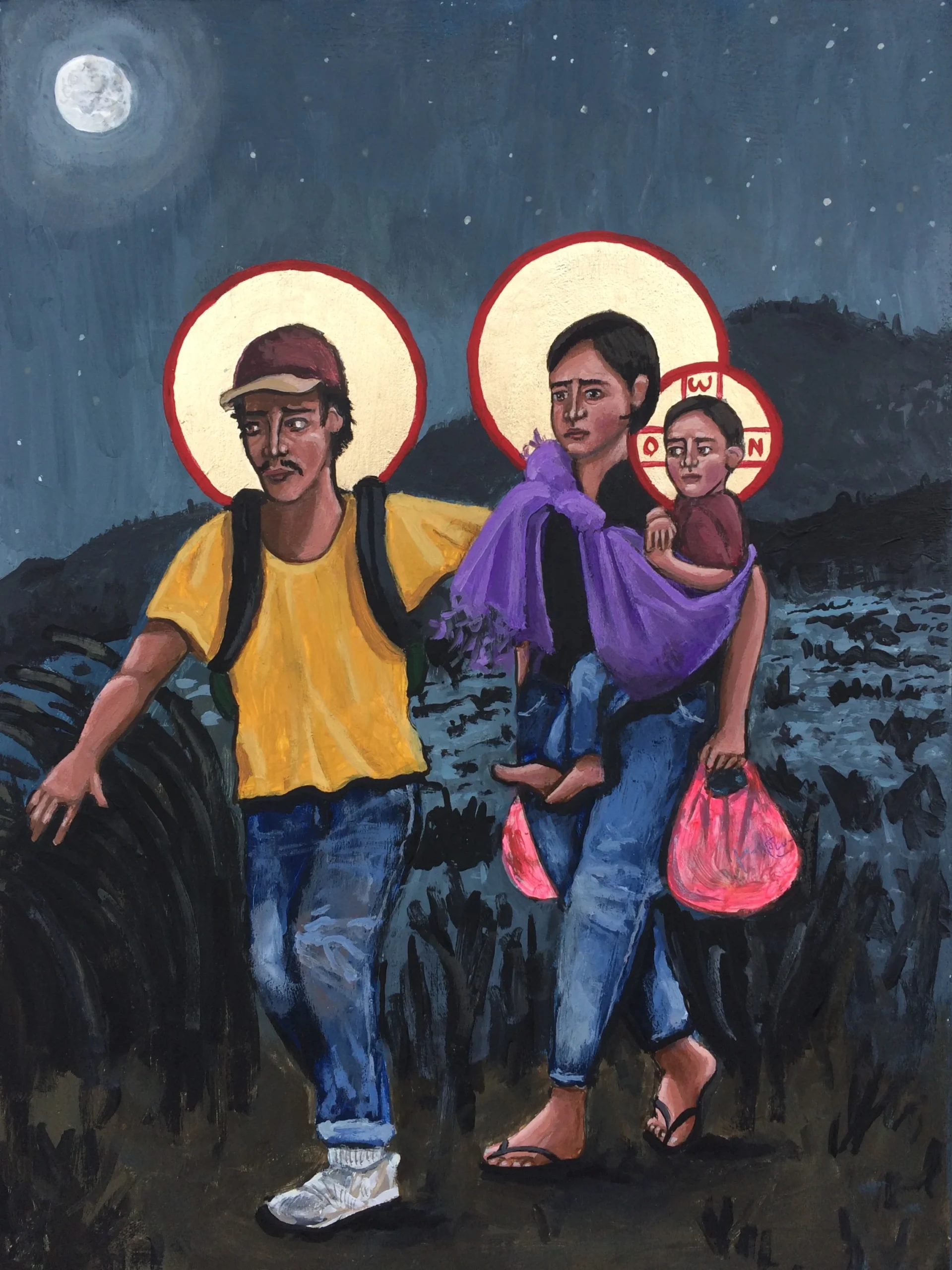
At Saint Francis Parish and Outreach, we insist on telling the whole Christmas story. Not the sanitized version that fits neatly into holiday decorations, but the real one. A child born under occupation. A family living under the threat of state violence. Parents who will soon have to flee as refugees to protect their child from a ruler who uses fear to maintain power.
Mary and Joseph know what it means to walk with uncertainty. They know what it means to travel while vulnerable. They know what it means to be told, directly and indirectly, that their lives matter less.
That makes the Holy Family deeply familiar to immigrants today.
Across our own community in Augusta and across this country, families are walking in fear. They are navigating detention centers, court dates, sudden policy changes, and the constant anxiety of separation. Many are doing exactly what Mary and Joseph did: protecting their children, trusting God, and moving forward even when the road is dangerous.
Christmas does not allow us to look away from that reality. Christmas demands that we see it.
The Gospel at Midnight Mass tells us that shepherds are the first to hear the good news. Shepherds. Not kings. Not officials. Not religious elites. Shepherds were among the poor, the overlooked, the ones society barely noticed. God entrusts them with the first proclamation of salvation.
That choice matters.
It tells us something about where God stands. God does not align with empire. Nor does he bless systems built on domination. God does not sanctify fear-based politics or authoritarian power dressed up as “order.”
This is why standing against fascism is not a political hobby for Christians. It is a theological necessity.
Fascism relies on fear. It requires scapegoats. It thrives by dividing people into those who belong and those who do not. The Christmas story dismantles that logic at its core. God becomes human without privilege. God chooses vulnerability over violence. The Divine enters history not to crush enemies, but to save lives.
Every time we refuse to dehumanize immigrants, we are living Christmas. Every time we resist narratives that portray vulnerable people as threats, we are proclaiming the Gospel. When we say that no human being is illegal, unwanted, or expendable, we are standing in the light that shines in the darkness.
The letter to Titus, also proclaimed at Midnight Mass, reminds us that the grace of God has appeared, bringing salvation to all. Not some. Not the deserving. Not the powerful. All.
Grace does not come with conditions. Grace does not ask for papers. It does not demand cultural conformity. Grace appears as a gift.
That grace teaches us how to live. It calls us away from cruelty and indifference and toward justice, mercy, and solidarity. It forms us into a people who refuse to cooperate with systems that harm the vulnerable, even when those systems claim legitimacy or tradition.
At Saint Francis Parish and Outreach, walking with immigrants is not an abstract idea. It is prayer with feet. It is advocacy. It is accompaniment. It is showing up when fear is loud and hope feels fragile. It is remembering that Christ is not only born in Bethlehem but continues to be born wherever people risk love in a broken world.
Christmas is not sentimental. It is dangerous. It threatens every system that depends on fear to survive.
That is why the light of Christmas cannot be extinguished. The darkness has tried before. Empires have risen and fallen. Rulers like Herod have come and gone. Yet the child in the manger still speaks, still challenges, still gathers the poor and the forgotten into a new kind of family.
Tonight, as candles flicker in the dark, we are reminded that light does not need permission from darkness. It simply shines.
May this Christmas find us braver. May it find us more committed to the dignity of immigrants and all who are pushed aside. May it find us resisting fascism in all its forms, not with hatred, but with courage rooted in love.
And may we never forget that the God we worship chose to begin life as a child with nowhere to lay his head.
That is good news. For all of us.
Pax et Bonum,
Bishop Greer


