|
There is a question underneath
every table.
Who is allowed to sit here?
Every human community has
answered that question with some combination of inclusion and exclusion. The
family table has its members and its guests and its empty chairs where people
used to sit. The restaurant has its price point, which is its own kind of wall.
The country club has its application process. The nation-state has its borders
and its documentation requirements and its enforcement machinery. Every table
is, in some sense, a declaration about who belongs.
Corpus Christi, the feast we
celebrate this Sunday, is the Church’s annual declaration about the table of
the Lord. And the declaration is this: the table of the Lord has no walls.
That sounds like a pleasant
thing to say. It is actually a deeply countercultural and, in the current
political climate, a genuinely dangerous thing to say. And I want to spend some
time in this blog post explaining why, before I tell you what we are preaching
about on Sunday.
The
Table as Political Act
When the early Church gathered
for the Eucharist in the first and second centuries, they gathered across
boundaries that Roman society considered fundamental. Free people and enslaved
people ate together. Jews and Gentiles ate together. Wealthy patrons and
destitute day laborers ate together. Men and women ate together in a context
where mixed-gender religious gatherings were unusual.
The Romans found this
suspicious. Not primarily because of the theology, though they misunderstood
the theology too. They found it suspicious because a table that crosses the
social categories used to organize society is a table that makes an implicit claim:
the categories that divide you out there do not apply in here.
That claim is political. It is
not political in the sense of partisan, in the sense of belonging to one party
or another. It is political in the original sense of the word: it is about how
human community is organized and who has power within it. The table of the Lord
is a counter-politics. It enacts, physically, in the act of eating together, a
different understanding of who belongs.
Paul writes to the Corinthians
that we, though many, are one bread and one body, because we all partake of
that one bread. The oneness comes from the table. The belonging is produced by
the eating together, not by satisfying a prior condition of worthiness or
status or documentation.
The manna in the wilderness,
which Deuteronomy holds up as the prototype of the Eucharist, did not fall
selectively. It fell on the whole community. Everyone who was hungry ate. There
was no means test, no background check, no review of immigration status. The
bread fell and the people gathered it and ate and were satisfied, and then in
the morning it was there again.
That is the table we are
gathering around on Sunday.
I am going to say something
plainly, because I think plainness is a form of respect and I think this
community deserves it.
We are living in a country that
has spent the past several months constructing one of the most elaborate
exclusion systems in its modern history. Immigration enforcement machinery
designed to remove people who have lived here for decades, built their lives
here, raised their children here. Policy after policy designed to narrow the
definition of who belongs until the circle is as small as possible. A cultural
project built on the explicit premise that some people’s presence here is
contaminating, threatening, inadmissible.
That is not the table of the
Lord. That is the opposite of the table of the Lord.
And the Church that celebrates
Corpus Christi while remaining silent about what is happening to the people
being excluded from the nation’s table has not understood what it is
celebrating. The feast of the Body and Blood of Christ is not a private religious
observance with no relationship to the world outside the sanctuary. It is a
weekly enactment of a counter-politics. It is the Church saying, in its most
fundamental liturgical act: the logic of this table is not the logic of that
world.
At this table, the immigrant who
crossed the border without the right papers receives the body of Christ
alongside the citizen who was born here. At this table, the queer person who
has been told by every other institution they have encountered that their
presence is unwelcome receives the same bread as everyone else. At this table,
the woman whose call to leadership the institutional Church has suppressed for
centuries stands at the altar and offers the Eucharist. At this table, there
are no second-class communicants.
That is not a political
statement. That is a eucharistic one. And it is the most radical thing we do
every Sunday.
The
Bonhoeffer Connection
Those of you who have been
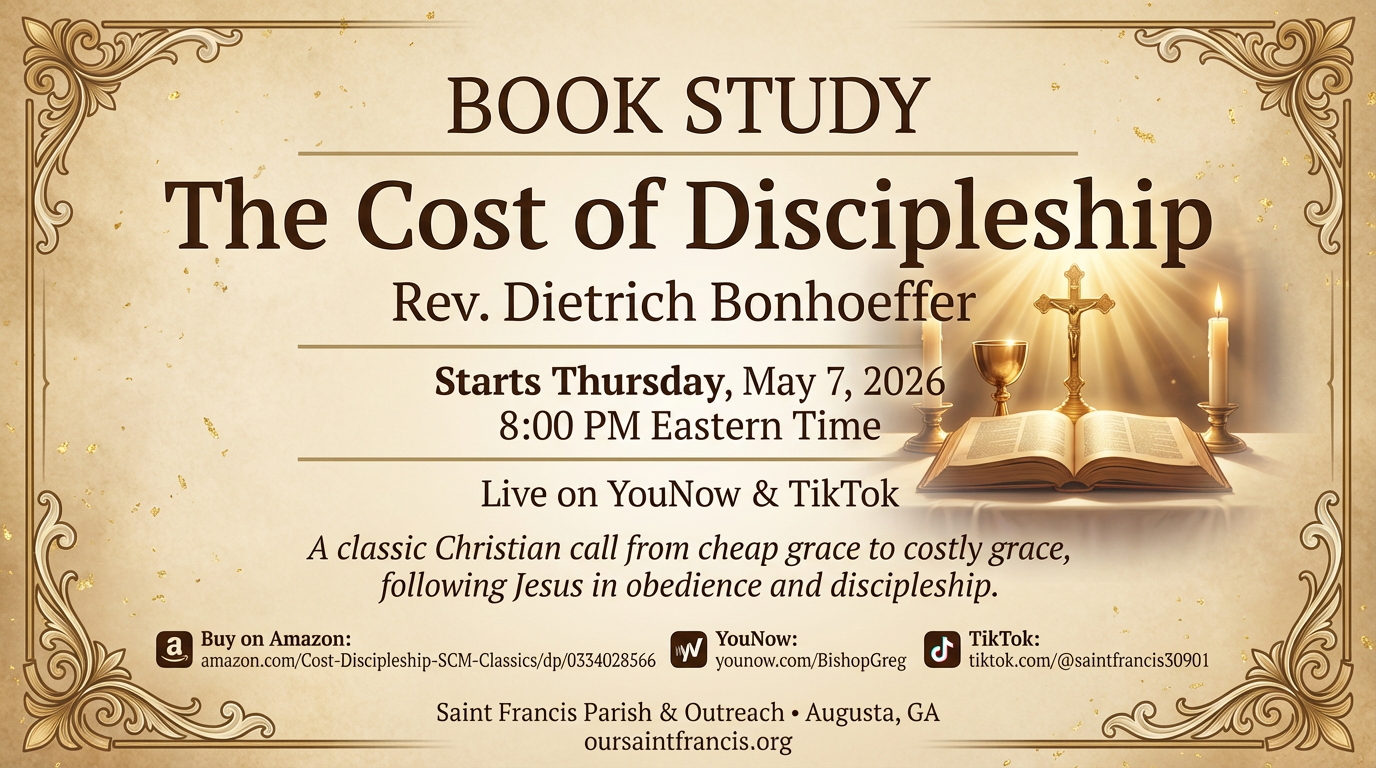
joining us on Thursday evenings for our book study on The Cost of Discipleship
will recognize the thread running through this. Bonhoeffer’s central argument
is that cheap grace produces communities that can be captured by any sufficiently
powerful ideology, because they have never been formed in anything that costs
them. The Church that accepted cheap grace in 1930s Germany was a Church that
had practiced a kind of Christianity so divorced from its own table that it
could not recognize fascism as the antithesis of everything it claimed to
believe.
The table of the Lord is not
cheap. The bread that Jesus offers in John 6 is his own flesh, given for the
life of the world. The cup is his blood. There is nothing cheap about it. And a
community formed around that table, a community that has been eating together
across every boundary the world uses to divide people, is a community with the
theological resources to say no when the world demands that it sort people into
those who belong and those who do not.
We are in session six of the
book study. If you have not joined us yet, Thursday at 8:00 PM Eastern Time on
Facebook and on TikTok at TikTok.com/@saintfrancis30901. Come and think with us
about what costly discipleship looks like at this particular table in this
particular moment.
“For my
flesh is true food, and my blood is true drink. Whoever eats my flesh and
drinks my blood abides in me, and I in him.”
(John 6:55–56, CPDV)
What
We Are Preaching Sunday
On Sunday the sermon is titled
“He Nourished You in the Wilderness,” from the Deuteronomy reading. We are
going to preach the manna as the prototype of the Eucharist, the table of the
Lord as the most radical political act the Church performs, and the specific
claim of this community: that the table at 557 Greene Street in Augusta,
Georgia, is a table with no walls.
John 6 gives us the hardest
eucharistic teaching in the Gospels. Jesus does not soften it when people
object. My flesh is true food. My blood is true drink. Whoever eats this bread
shall live forever. And the community that gathers to eat this bread becomes
one body, many people, one bread, no category of exclusion surviving the act of
eating together.
Come and hear it. Bring someone
with you who needs to know that a table without walls exists and that they are
welcome at it.
Augusta
Pride: Three Weeks Away. We Still Need Your Help.
Augusta Pride is at the end of
June. That is three weeks from now. We need $775 to have a Saint Francis Parish
and Outreach booth there, and we are still working to raise it.
A booth at Pride is an extension
of everything this blog post is about. It is the table of the Lord made visible
outside the sanctuary. It is the Church going to the place where the people who
have been told they are not welcome gather, and saying: you are welcome. In
person. With our name on a sign. Not just online, not just in a statement, but
physically present at a festival where our presence carries theological weight.
If the eucharistic theology of
Corpus Christi means anything in practice, it means showing up at Augusta
Pride.
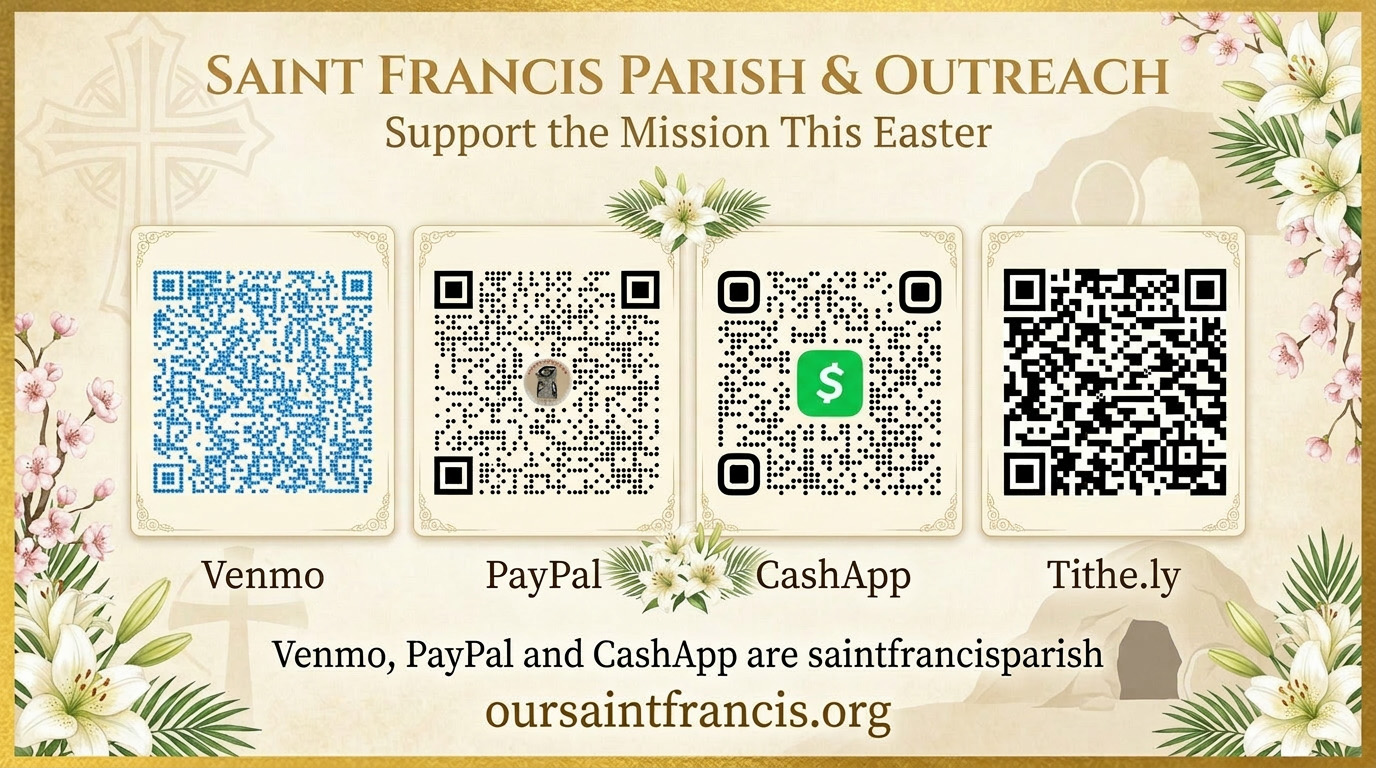
Please give what you can. Please
share this with people who believe in this kind of ministry.
Venmo: @saintfrancisparish
PayPal: paypal.me/saintfrancisparish
Cash App: $saintfrancisparish
The bread is enough. It has
always been enough. There will be twelve baskets left over.
See you Sunday.
Pax
et Bonum,
Bishop Greer
|