|
This has been one of the more
difficult weeks I have had in a long time.
I want to be honest with you
about that, because I think the pastoral relationship between a pastor and a
community requires honesty, and because what I have experienced this week is
not separate from what I want to preach about on Sunday. It is the same thing.
A a week ago I stopped to
help an African-American woman who was in medical distress. We were one hundred
yards from the entrance of a local hospital. The medical professionals at that
hospital refused to come and help her.
I posted about what I witnessed.
About a woman in need being failed by people who were trained and obligated to
help her. About the specific and documented reality that Black people in this
country receive systematically worse medical care than white people, and that
what I watched happen to her was not an isolated incident but a pattern with a
name.
The response broke my heart. Not
because people disagreed with me, but because the energy of that response went
not toward the woman who had been failed, not toward the hospital, not toward
the systems that produce that kind of failure, but toward me. A week of
organized attacks from people claiming I am not a real bishop, not a real
priest, that I am dangerous. Why? Because I named what I saw.
I am telling you this not to ask
for sympathy, though the kindness of this community has meant more than I can
say. I am telling you this because it is the world we live in right now, and I
think we need to talk about it.
The
Anger That Is Filling Everything
Something has shifted in the
temperature of public life. I do not think I am imagining it and I do not think
you are either.
The level of anger in our public
discourse has reached a place that I find genuinely alarming. Not the anger
that comes from injustice, which is appropriate and often necessary. The anger
that comes from fear that has curdled into contempt. The anger that looks for
targets rather than solutions. The anger that is organized and directed and
that has found in social media a delivery mechanism of almost perfect
efficiency.
People are being hurt by this.
Not abstractions. Real people. The woman who was refused care at the hospital
entrance is a real person. The families being separated by immigration
enforcement are real families. The queer teenagers in Augusta who have been
told by their churches and their schools and sometimes their own households
that they do not belong are real teenagers. And the pastors and advocates and
ordinary people who stand up for them are real people who pay a real cost for
doing so.
The anger being directed at
those who speak up is not random. It is strategic. It targets the people whose
voice most threatens the comfort of those who benefit from the current
arrangement. It is designed to make the cost of speaking high enough that people
stop.
I have watched it work on people
I respect. I have watched voices go quiet that should be loud. I have watched
communities pull back from commitments they made when the cost was theoretical
and the attacks were not yet personal.
I understand it. I have had the last week to understand it from the inside.
“Whoever
does not take up his cross and follow me is not worthy of me. Whoever finds his
life, will lose it. And whoever will have lost his life because of me, shall
find it.” (Matthew 10:38–39, CPDV)
What
the Cross Actually Means
This Sunday’s series word is
CROSS. It is week three of The Kingdom Worth Everything: Costly Discipleship in
Ordinary Time, and this week we arrive at the word that sits at the center of
everything the series has been building toward.
I want to say something about
the cross that I think gets lost when we make it decorative.
The Roman cross was not a
symbol. It was an instrument of state terror. It was the empire’s tool for
executing people who challenged the existing order: slaves, criminals, and
political agitators. The condemned carried the crossbeam through public streets
to the execution site. The whole point was visibility. The message was: this is
what happens when you stand between power and the people power has decided are
expendable.
When Jesus tells the disciples
to take up their cross and follow him, they know exactly what he is talking
about. There is no softness in the image. There is no metaphor. There is a
concrete, specific, politically loaded description of what it costs to follow
the one who said the last shall be first and the meek shall inherit the earth
and whatever you do to the least of these you do to me.
The anger being directed at
people who speak up for the vulnerable is not a new phenomenon. It is the
cross, in the specific form it takes in 2026 in the United States of America.
It is the cost of standing in the way of the systems that benefit from the
silence of the Church.
And the question the text puts
to us is not whether the cost is real. It is. The question is whether we are
going to keep going anyway.
A
Woman in Shunem Made a Room
The first reading this Sunday is
about a woman in the town of Shunem who noticed that the prophet Elisha passed
by frequently and decided to make room for him. She prepared a small upper
room: a bed, a table, a chair, a lampstand.
She did this knowing that
aligning her household with a prophet who spoke uncomfortable things to power
was not a neutral act. She did it anyway. And what she received in return was
the thing she did not know she was asking for.
Making room for the difficult
truth, for the uncomfortable witness, for the person whose presence in your
house marks you: that is the cross at the scale of a spare room. It is not
dramatic. It is specific and practical and it costs something and it is what
faithful people do in every generation when the easier option is to look away.
This community has been making
room. For the immigrant family. For the queer young person who found every
other church door closed. For the Black woman in medical distress who needed
someone to stop and stay and say: what happened to you matters. For the voice
of the prophet who passes by frequently and needs somewhere to rest.
Keep making room.
What
I Believe About Hatred
I want to say something direct,
because I think the moment requires directness.
Hatred is a spiritual condition
before it is a political one. The organized campaigns of contempt and
dehumanization that are filling our public life are not primarily a political
problem, though they have political expressions. They are the fruit of a spiritual
formation that has gone badly wrong: people who have been trained to find their
identity in who they oppose rather than who they love, who have been taught
that the world is divided into the worthy and the unworthy and that cruelty
toward the unworthy is not only acceptable but righteous.
The Church has, in too many
places, contributed to that formation rather than challenging it. Too many
pulpits have given religious sanction to contempt. Too many communities have
built their identity around exclusion rather than welcome. And the people who
paid the price for that are the people who are always expendable: the poor, the
immigrant, the queer person, the person of color.
What this community is called to
be is the counter-testimony to all of it. Not by matching the anger, but by
refusing to be moved by it from the thing we are called to do. The antidote to
hatred is not counter-hatred. It is the kind of love that is costly enough to
be worth taking seriously: the love that makes a room for the prophet, that
gives a cup of cold water to the least of these, that takes up the cross and
follows.
That is what we are preaching
about this Sunday. Come and hear it.
Before I close I want to say
thank you. To this community for the kindness you have shown through a
difficult week. To the people who sent messages of support after the
posts. To the people who came to Mass and brought their presence and their
prayers.
The attacks from people who want
me to be quiet have not worked. I am still here. I am still speaking. And I
will continue to be, as long as there is a woman one hundred yards from a
hospital entrance who needs someone to stop and stay.
The kingdom is worth everything
it costs.
See you Sunday.
Pax
et Bonum,
Bishop Greer
|
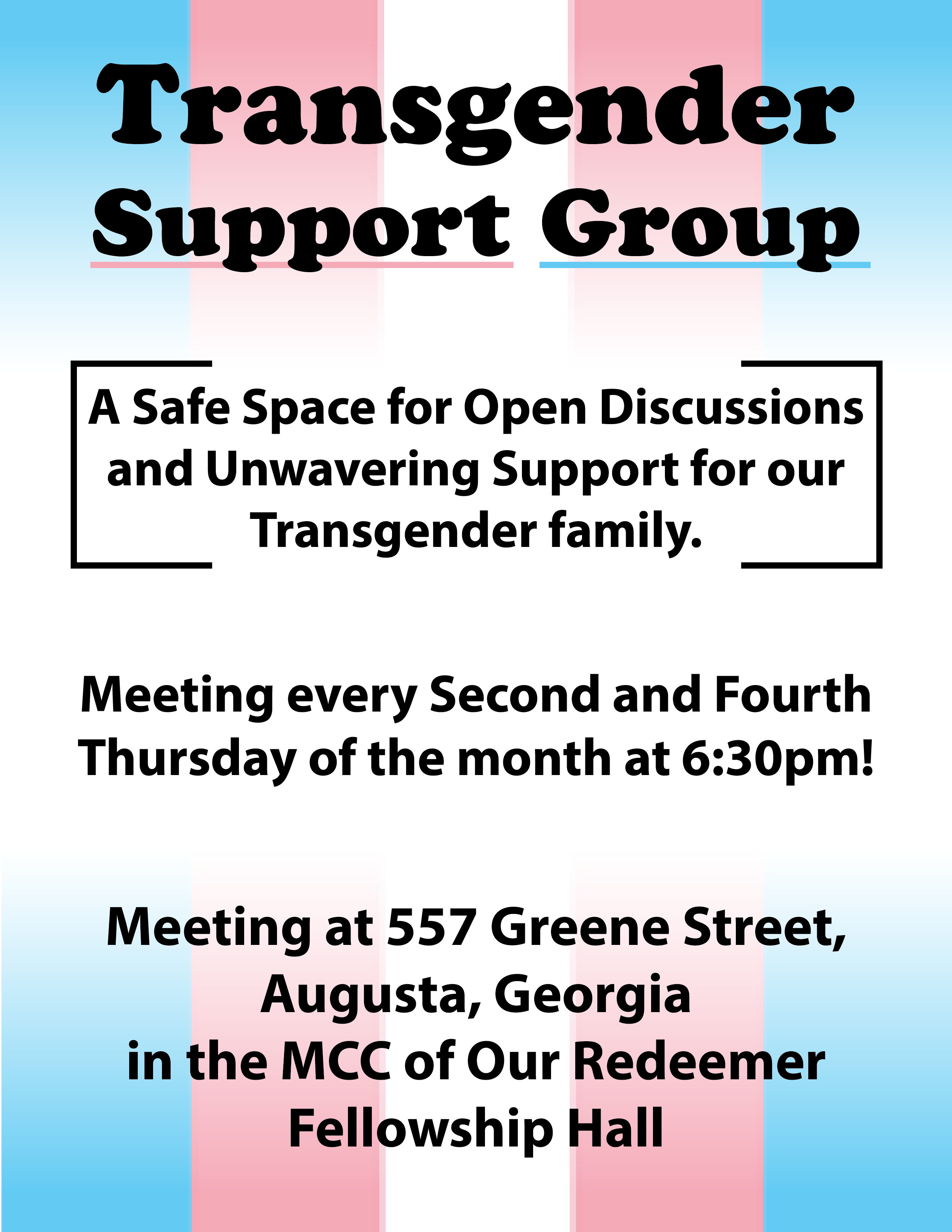
 Join us every Sunday at 3:00 PM at 557 Greene Street in Augusta, Georgia in the sanctuary of the MCC of Our Redeemer. Rosary starts at 2:25 PM every Sunday.
 For the St. George family; Dana Godsey, Fr. Bryan Wolf; Mary Nehls; James (Cancer); Jacob (Cancer); James Long (Cancer); Mickey; Jacob Williams; Brittney (Cancer); Jennifer (DV Survivor, Homeless); Bishop James Long; David; John; Bishop Ben and Darlene Williams; Ralph Wilkins; Dillan; Wolfie; Misa; Kellsie; Ember; Chris Thompson; Killa Nova (Cancer); Helena; Beth; Thomas; Katelyn McConnell; Guillaumette's mother; Katerina; Mcam; Antonio; Edmah Osoro; Ethan Wolf; David Lawrence; Dustin; Malachi (Cancer); Janelle (Cancer); Ashley; Christy Ann (Tendons); Barb (Cancer); growth for our parish family; all those in the path of severe weather, end of hostilities in Ukraine and the Middle East; for an end to gun violence.