|
This Sunday's Gospel is the
Parable of the Sower, and I want to tell you before you hear it preached why it
has been sitting heavily with me this week.
A sower goes out and scatters
seed without regard for where it lands. Some falls on the path and is eaten by
birds. Some falls on rocky ground and springs up fast, then withers because it
has no root. Some falls among thorns and is choked out. And some falls on good
soil and produces a harvest beyond anything the sower could have planted
deliberately.
Jesus tells this story to a
crowd standing on a shoreline in occupied Galilee, under an empire that did not
particularly care whether ordinary people flourished or withered. He is not
describing an abstract spiritual principle. He is describing what it looks like
to keep sowing anyway, in ground you do not control, under conditions you did
not choose, without any guarantee of how much of what you plant will survive to
harvest.
I have been thinking about
ground this week because of what is happening to a lot of people in this state
right now.
The
Ground in Georgia Right Now
Georgia is currently one of the
top five states in the country for immigration enforcement arrests. Reporting
this year has documented daily arrest numbers in the dozens statewide, an
increase of roughly eighty-five percent year over year, aided by a growing
number of local sheriff's offices and police departments that have signed
agreements to perform immigration enforcement functions. Simply being pulled
over for a routine traffic stop can now be the beginning of someone's detention
and removal process.
Nationally, twenty-two people
have died in ICE custody so far this year, on top of thirty-three deaths in all
of last year. For comparison, there were four deaths in ICE custody in 2025 and
three in 2022. Just this week, a man named Lorenzo Salgado Araujo died after
ICE agents attempted to detain him in Houston. The agency's own account of what
happened has not been supported by any video evidence that has surfaced.
Closer to home, the federal
government spent nearly two hundred million dollars purchasing warehouses in
Social Circle and Oakwood, Georgia, intending to convert them into detention
facilities holding thousands of people. Those specific plans were scrapped
after sustained community opposition, but the broader machinery of enforcement
in this state has not slowed.
I am not telling you this to
make a partisan point. I am telling you because this is the ground a great many
of our neighbors are being asked to grow in right now: rocky, thin, and
hostile, with very little protection from the sun that scorches or the birds
that carry away what has been planted in them.
“Every
creature groans inwardly, as if giving birth, even until now.” (Romans 8:22, CPDV)
The
Kingdom Worth Everything: GROUND
This Sunday is week five of our
series, and the word is GROUND.
Paul writes to the Romans that
the whole of creation is groaning, like a woman in labor, waiting for a freedom
that has not yet arrived. That image has always struck me as one of the most
honest things in scripture. Paul does not say creation is at peace, or that it
has already been delivered. He says it is groaning. In labor. In the middle of
something that hurts and has not yet resolved, but that is moving toward life
rather than death.
That is what I think this
Sunday's readings, taken together, are actually about. Isaiah promises that
God's word does not return empty; it accomplishes what it was sent to do, the
way rain soaks into ground and eventually produces grain, even though the process
from rainfall to harvest is slow and mostly invisible. Paul says creation is
groaning toward a freedom it does not yet have. And Jesus tells a story about a
sower who keeps sowing into ground that is often rocky, often thin, often
choked with thorns, trusting that some of it, not all of it, but some of it,
will take root and produce fruit beyond anything reasonable to expect.
None of these texts promise that
the ground will be friendly. They promise that sowing is still worth doing, and
that growth is still possible, even in soil that has every reason to fail.
I do not have a tidy resolution
to offer you about immigration enforcement in Georgia. I do not think Sunday's
sermon will either, not because the topic is not urgent, but because false
resolutions are not what scripture offers here.
What I can tell you is what this
community has been doing and will keep doing: showing up as ground that
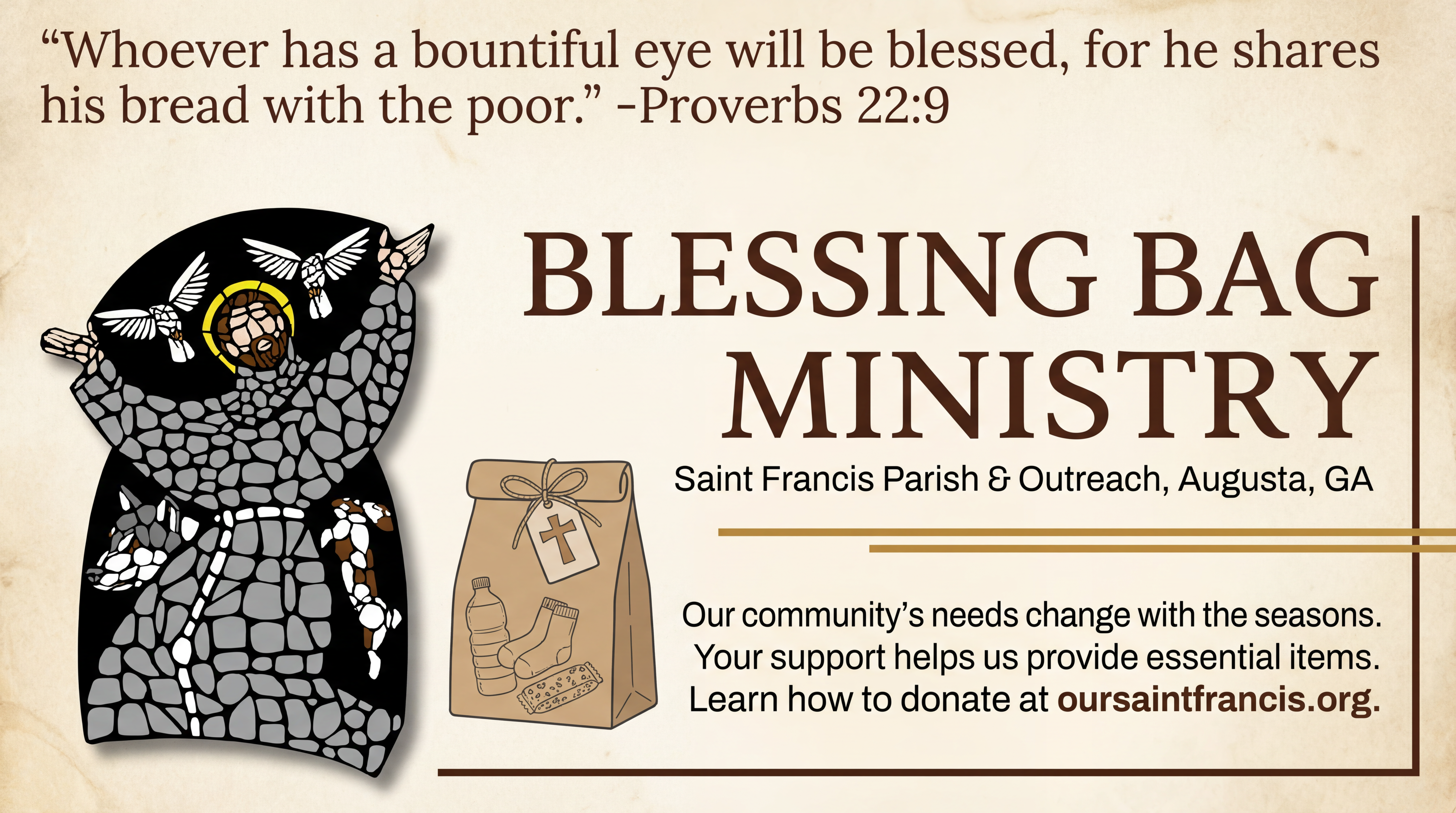
receives rather than ground that rejects. The Blessing Bags we hand out. The
Know Your Rights information we make available. The simple, repeated insistence
from this pulpit that immigrants are our neighbors and not a problem to be
solved by whichever agency has the biggest budget that year. None of that
changes federal policy. All of it changes whether a specific, particular person
standing in front of us on a specific day finds this community to be rocky
ground or good soil.
We cannot control the weather.
We cannot control the birds that come for the seed on the path, or the sun that
scorches the seedlings with no root. What we can control, together, is what
kind of ground this parish is for the people who land here.
Come Sunday. We will sit with
the parable together, and with everything it has to say about sowing into
ground you do not control, trusting a harvest you cannot yet see.
Pax et Bonum,
Bishop Greer
|
 Join us every Sunday at 3:00 PM at 557 Greene Street in Augusta, Georgia in the sanctuary of the MCC of Our Redeemer. Rosary starts at 2:25 PM every Sunday.
 For the St. George family; Dana Godsey, Fr. Bryan Wolf; Mary Nehls; James (Cancer); Jacob (Cancer); James Long (Cancer); Mickey; Jacob Williams; Brittney (Cancer); Jennifer (DV Survivor, Homeless); Bishop James Long; David; John; Bishop Ben and Darlene Williams; Ralph Wilkins; Dillan; Wolfie; Misa; Kellsie; Ember; Chris Thompson; Killa Nova (Cancer); Helena; Beth; Thomas; Katelyn McConnell; Guillaumette's mother; Katerina; Mcam; Antonio; Edmah Osoro; Ethan Wolf; David Lawrence; Dustin; Malachi (Cancer); Janelle (Cancer); Ashley; Christy Ann (Tendons); Barb (Cancer); Barbara; growth for our parish family; all those in the path of severe weather, end of hostilities in Ukraine and the Middle East; for an end to gun violence.