|
It has been a tiring week, and I
want to be honest with you about that rather than pretend otherwise.
This week I was called a fake
priest, again, by someone loudly insisting he is a good Christian, for the
offense of calling out racism publicly. I will not spend this post relitigating
the specifics of who said what. What I want to talk about instead is a pattern
that has become impossible for me to ignore after 28 years in this work.
The people who most confidently
declare that my priesthood is fake, that my faith is not real Christianity,
that I have somehow failed the tradition by insisting the Gospel means
something for the poor, the immigrant, and the person of color, are very often
not people whose own lives bear any particular fruit of holiness. I am not
speaking in the abstract. I have watched people with documented, serious
failures of basic human decency, failures that would disqualify anyone from
moral authority in any healthy community, position themselves as the defenders
of true Christian orthodoxy against a bishop who has spent over two decades
trying to build a place where people are safe.
That is exhausting in a very
specific way. Not because the accusation itself carries weight. It does not.
But because it takes energy to keep responding to noise, even noise that
deserves no real response, and that energy is energy I would rather spend on
this parish, on the people who show up here looking for something real.
I was also on the receiving end
this week of a fresh round of attacks from people identifying as Roman
Catholic, insisting that Old Catholic orders are not real, that my ordination
is not valid, that everything this community does is therefore illegitimate. I
have answered this question more times than I can count over more than twenty
years of ministry, and I will keep answering it, but I want to name something
plainly: questioning a bishop's legitimacy is a much more comfortable activity
than actually doing the work of loving your neighbor. It requires no risk. It
requires no vulnerability. It requires no actual engagement with the poor, the
excluded, or the harmed. It is, in its way, one of the cheapest forms of
religious performance available.
“By their
fruits you will know them.” (Matthew
7:16, CPDV)
I keep returning to that verse
this week, not as a weapon but as a genuine measure. Not: whose paperwork is in
order. Not: whose ordination lineage passes inspection according to people who
have appointed themselves gatekeepers. Whose life produces fruit that looks
like the kingdom. Whose life produces fruit that looks like its opposite.
I know which fruit I am trying
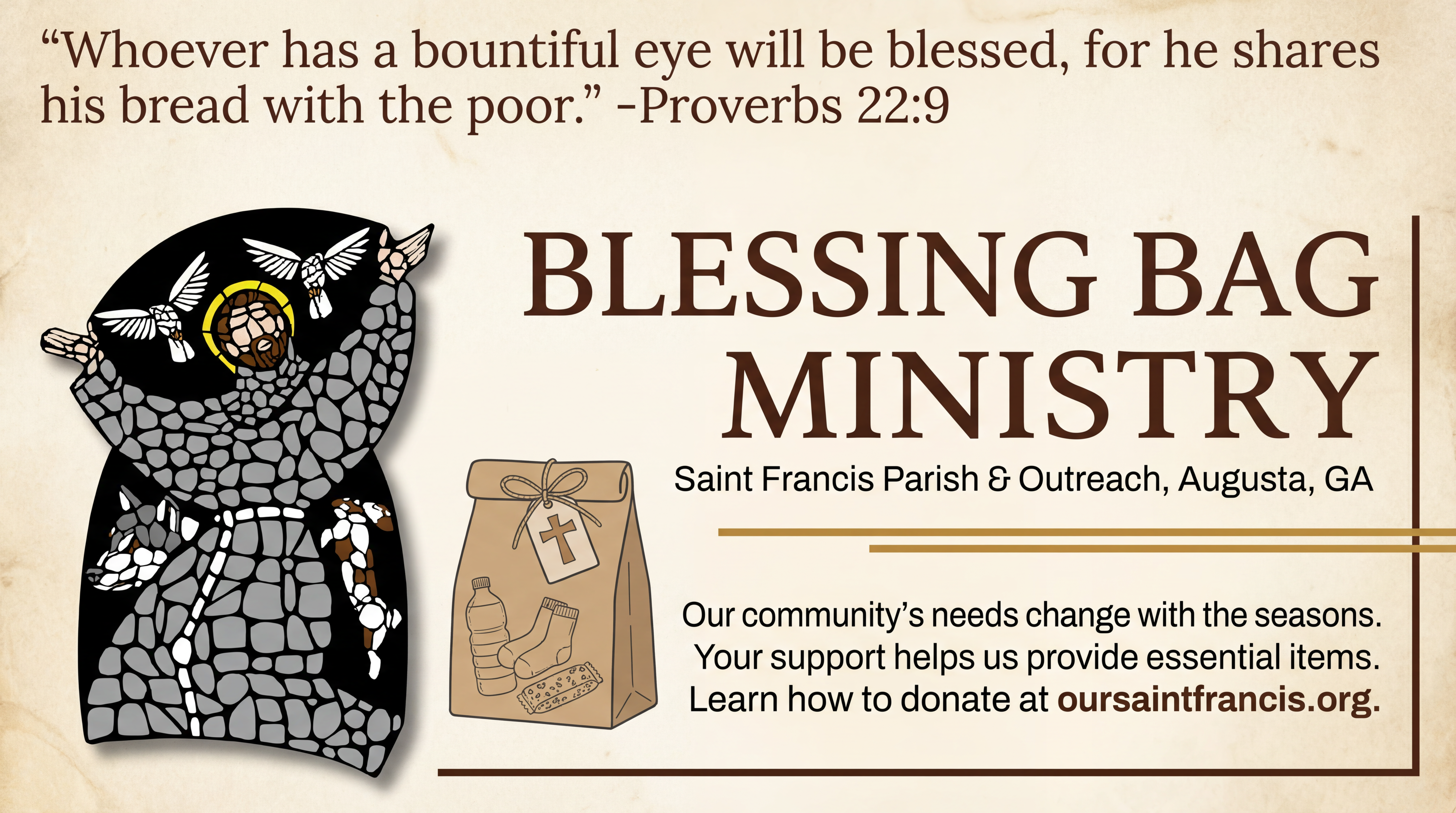
to grow here. I know which fruit this community has been growing, one Blessing
Bag, one Pride booth, one Sunday of open welcome at a time, for over two
decades. I trust that fruit more than I trust the loudest voices insisting from
a distance that none of it counts.
We continue our series The
Kingdom Worth Everything this Sunday, and after a week like this one, I find
myself especially glad for where the series has landed us.
We have moved through CALLED,
SPEAK, CROSS, YOKE, GROUND, and PATIENCE. This Sunday we arrive at a word that
feels almost designed for a week like this: WORTH.
I am not going to tell you here
what the sermon says. But I will tell you that after being told, repeatedly, by
people who have appointed themselves the arbiters of authenticity that I am not
worth listening to, that this community is not worth taking seriously, the
question of worth, who determines it, and by what measure, has stopped being an
abstract theological topic for me this week. It has become personal in a way I
did not expect when I first mapped out this series months ago.
Come Sunday. Bring whatever week
you have had, whatever voices have told you that you or your love or your faith
do not count. We will sit with a different measure together.
Thank you for the kindness so
many of you have already shown this week. It has mattered more than you know.
Pax
et Bonum,
Bishop Greer
|
 Join us every Sunday at 3:00 PM at 557 Greene Street in Augusta, Georgia in the sanctuary of the MCC of Our Redeemer. Rosary starts at 2:25 PM every Sunday.
 For the St. George family; Dana Godsey, Fr. Bryan Wolf; Mary Nehls; James (Cancer); Jacob (Cancer); James Long (Cancer); Mickey; Jacob Williams; Brittney (Cancer); Jennifer (DV Survivor, Homeless); Bishop James Long; David; John; Bishop Ben and Darlene Williams; Ralph Wilkins; Dillan; Wolfie; Misa; Kellsie; Ember; Chris Thompson; Killa Nova (Cancer); Helena; Beth; Thomas; Katelyn McConnell; Guillaumette's mother; Katerina; Mcam; Antonio; Edmah Osoro; Ethan Wolf; David Lawrence; Dustin; Malachi (Cancer); Janelle (Cancer); Ashley; Christy Ann (Tendons); Barb (Cancer); Barbara; growth for our parish family; all those in the path of severe weather, end of hostilities in Ukraine and the Middle East; for an end to gun violence.