|
I want to write something
different this week.
If you have been reading this
blog for the past two months, you have walked through a lot with me: the wars
in Ukraine and Gaza, the earthquakes in Venezuela, the deaths of immigrants in
encounters with ICE, a march of masked white nationalists through Washington on
this country's two hundred fiftieth birthday, and my own exhaustion after
twenty-three years of trying to build something loving in a world that often
seems to prefer hate. I have not hidden any of that from you, and I am not
going to pretend today that any of it has resolved itself. It has not.
But this Sunday closes our
series, The Kingdom Worth Everything, and the final word is ENOUGH. I have been
sitting with that word for the past few days, and I want to offer you something
more hopeful than I have managed to offer in recent weeks. Not because the
world has become less heavy. Because hope, real hope, is not the absence of
heaviness. It is what you choose to hold onto in the middle of it.
This Sunday's Gospel is the
feeding of the five thousand. A crowd has followed Jesus into a deserted place.
Evening comes. The disciples want to send everyone away to fend for themselves,
because all they have on hand is five loaves and two fish, which is nowhere
near enough for that many people.
Jesus takes the five loaves and
two fish anyway. He blesses them. He breaks them. And somehow, in a way Matthew
does not try to explain, everyone eats until they are full, and when it is
over, the disciples gather up twelve full baskets of what is left.
Twelve baskets left over. Not
just enough. More than enough, after everyone was already fed.
I want you to sit with that
detail, because I think it is the whole sermon in a single image. Scarcity is
real. The disciples were right that five loaves and two fish were not enough
for five thousand people, by any ordinary math. And yet the story does not end
with ordinary math. It ends with abundance so complete that there was more left
over than they started with.
“Neither
death, nor life, nor Angels, nor Principalities, nor Powers, nor the present
things, nor the future things, nor strength, nor the heights, nor the depths,
nor any other created thing, will be able to separate us from the love of God,
which is in Christ Jesus our Lord.”
(Romans 8:38–39, CPDV)
Where
I Am Finding Hope Right Now
I do not want to offer you hope
in the abstract, so let me be specific about where I have actually found it
this week.
In Burundi, a hospital's
maternal health unit that used to lose power unpredictably, putting mothers and
newborns at risk during deliveries, now runs on solar energy. Lights that used
to go out at the worst possible moment now stay on. It is a small story in the
scope of the whole world, and it is exactly the kind of thing that rarely makes
headlines. But somewhere tonight, a baby will be born safely under a light that
would not have been there a year ago.
I have found hope in the
diplomats and humanitarian workers who keep showing up to the table year after
year, refusing to let the scale of the world's need talk them out of trying.
The United Nations' humanitarian leadership has been explicit this year that
they believe real, sustained peacemaking is possible in more than one of the
conflicts currently causing so much grief, not because the work is easy, but
because enough people have refused to stop working at it.
And I have found hope closer to
home, in this parish. In the sixteen people who signed up for our newsletter at
Augusta Pride because they found out a church existed that would not turn them
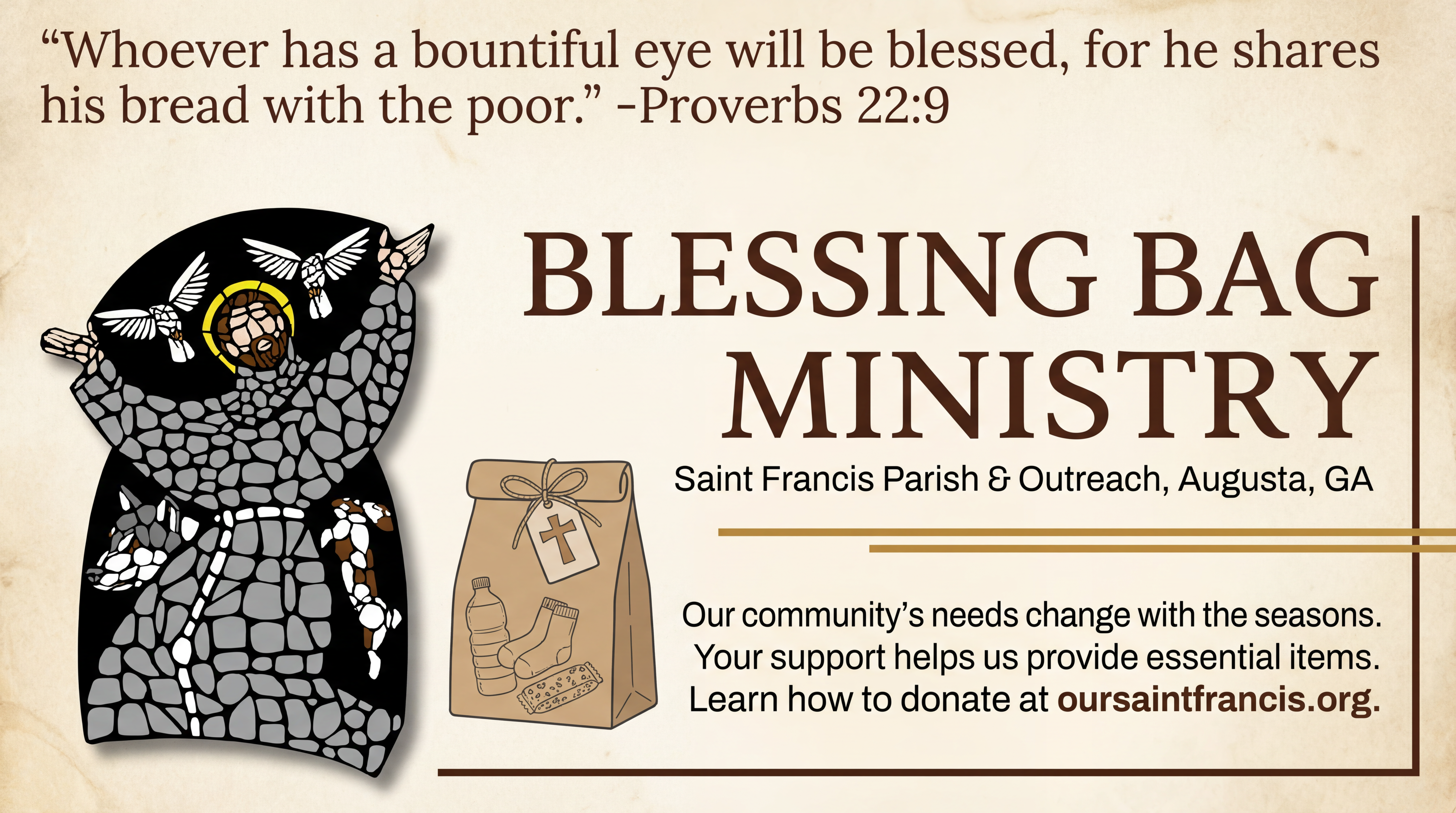
away. In every Blessing Bag handed to a neighbor sleeping outside. In the fact
that after twenty-three years, this community still gathers every Sunday, still
feeds whoever shows up, and still has something left over to give away.
Twelve baskets left over. That
has been true here more often than my tired days let me remember.
What
Enough Actually Means
I am not going to tell you what
Sunday's sermon says about the word ENOUGH. But I will tell you this much: the
crowd in Matthew's Gospel did not have enough by any calculation available to
them in that moment. And they ended up with more than enough anyway, because
the one distributing the bread was not limited by the same math the disciples
were using.
If you are tired, if the news
this year has worn you down the way it has worn me down, if you have been
waiting for your own five loaves and two fish to turn into something that
actually feeds the people in front of you: I want you to know that the story
does not end with the disciples' fear. It ends with twelve baskets left over.
Come Sunday. We will close this
series together, and we will talk about what enough really means, for a world
that keeps insisting there is not enough to go around.
Thank you for staying with me
through a hard stretch of weeks. It has meant more than I have been able to
say.
Pax
et Bonum,
Bishop Greer
|
 Join us every Sunday at 3:00 PM at 557 Greene Street in Augusta, Georgia in the sanctuary of the MCC of Our Redeemer. Rosary starts at 2:25 PM every Sunday.
 For the St. George family; Dana Godsey, Fr. Bryan Wolf; Mary Nehls; James (Cancer); Jacob (Cancer); James Long (Cancer); Mickey; Jacob Williams; Brittney (Cancer); Jennifer (DV Survivor, Homeless); Bishop James Long; David; John; Bishop Ben and Darlene Williams; Ralph Wilkins; Dillan; Wolfie; Misa; Kellsie; Ember; Chris Thompson; Killa Nova (Cancer); Helena; Beth; Thomas; Katelyn McConnell; Guillaumette's mother; Katerina; Mcam; Antonio; Edmah Osoro; Ethan Wolf; David Lawrence; Dustin; Malachi (Cancer); Janelle (Cancer); Ashley; Christy Ann (Tendons); Barb (Cancer); Barbara; growth for our parish family; all those in the path of severe weather, end of hostilities in Ukraine and the Middle East; for an end to gun violence.