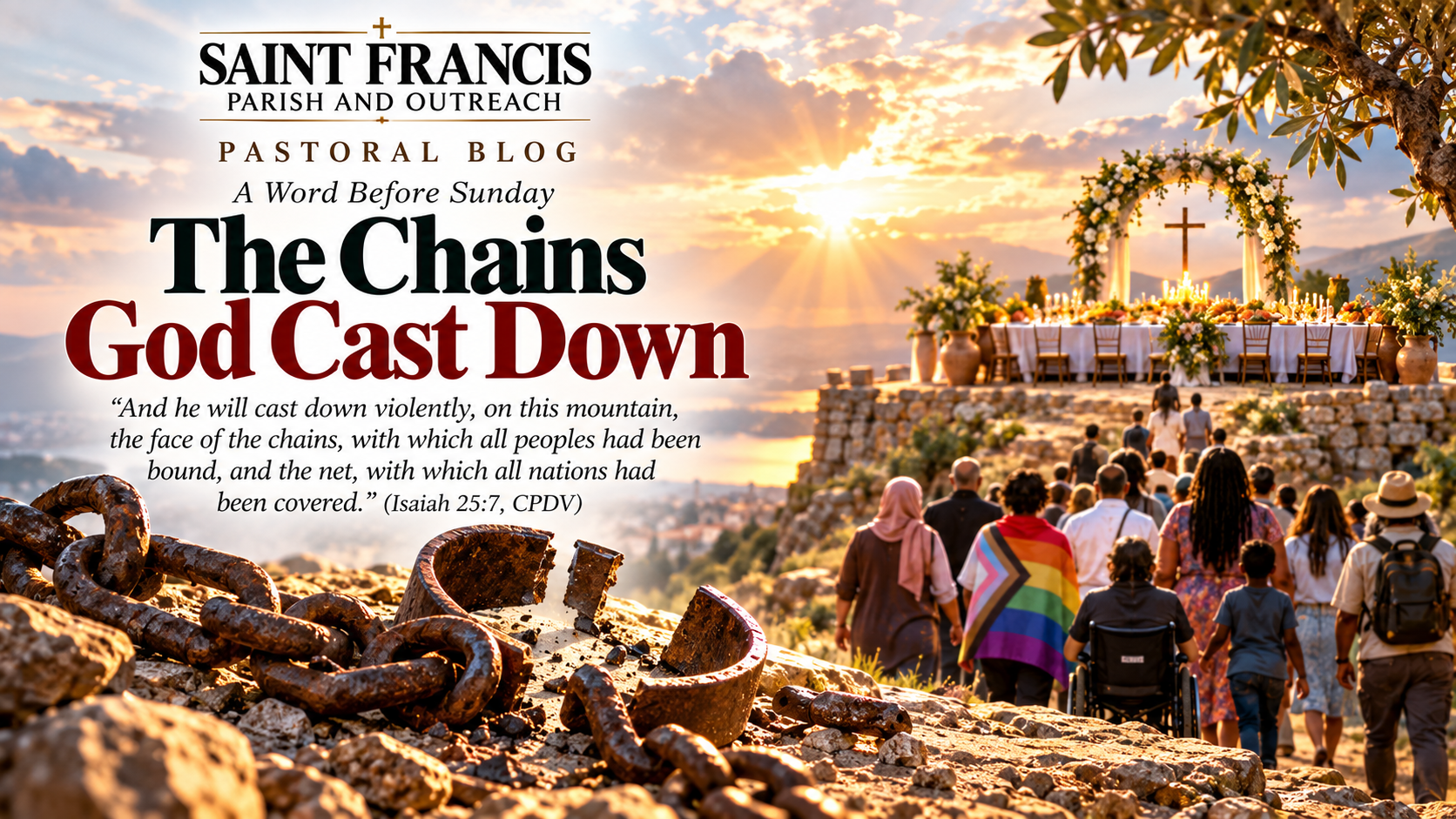
There is a sentence in this Sunday’s first reading that
I wish more people would sit with before they open their mouths in the name of
God.
“And
he will cast down violently, on this mountain, the face of the chains, with
which all peoples had been bound, and the net, with which all nations had been
covered.” (Isaiah 25:7, CPDV)
Read it slowly. The chains are not loosened politely.
God throws them down. And notice the reach of it. Not the chains of one people,
one nation, one favored group. The chains “with which all peoples had been
bound.” The net “with which all nations had been covered.” Isaiah is describing
the hand of God tearing down every structure human beings have built to hold
other human beings beneath them, and then setting a table on the very mountain
where the chains fell.
The Freedom Is for Every
Face
That is the freedom this Sunday announces. It is not a
freedom that arrives for the comfortable and leaves everyone else where they
were. In the very next verse the prophet says the Lord God “will take away the
tears from every face.” Every face. Not every face that has been vetted,
approved, and found sufficiently like ours.
Which makes me want to ask an uncomfortable question. If
God spends this whole passage casting chains down, what do we call the person
who picks them back up and calls it holiness?
Whoever You Find
The Gospel gives us the other half of the picture. A
king prepares a wedding feast. The invited guests, the ones with standing, the
ones who assumed the seat was theirs, are “not willing to come.” One goes to
his country estate, another to his business, and some of them turn violent
toward the servants who brought the invitation. So the king sends the servants
out again: “go out to the ways, and call whomever you will find to the
wedding.” And they do. They gathered “all those whom they found, bad and good,
and the wedding was filled with guests.”
Look at what is missing from that scene. No one is asked
for a clean record, a doctrinal exam, a certificate, or a résumé. Bad and good
come in together, straight off the road. The hall fills with the people nobody
planned on, and it fills because the proper people were too busy protecting
their own standing to come.
I want to be careful here, because this very parable has
been twisted. For centuries some preachers used it to claim that God had
discarded the Jewish people. That reading is a cruelty that Scripture was made
to carry, and it is exactly the pattern I want to name.
The People Who Rebuild the
Chains
There is a kind of person, and I have met many of them,
who reads the Bible the way a prosecutor reads a statute: hunting for the
sentence that proves the defendant was guilty before the trial began. They have
already decided who is beneath them. They open Scripture to get permission.
Racism. After Noah’s drunkenness the text says, “Cursed be
Canaan, a servant of servants will he be to his brothers” (Genesis 9:25). The
curse falls on Canaan. Nothing in the passage mentions skin, Africa, or race.
It was stretched across a continent anyway, and a verse telling enslaved people
to obey their masters (Ephesians 6:5) was preached from pulpits as though God
had blessed the auction block. The Southern Baptist Convention was founded in
1845 in the shadow of that argument. In 1995 it formally repented, acknowledging
that slavery shaped its founding and that its members had defended the “right”
to own slaves. Bob Jones University banned interracial dating on the claim that
God had separated the races on purpose, and dropped the ban in March of 2000,
announced on national television. Every one of those positions was defended
with Scripture. Every one has since been abandoned by the institutions that
held it. The Bible did not change. The excuse simply stopped being useful.
Misogyny. First Timothy 2:12 gets pulled out to bar women from
teaching and leading, as though the Lord who sent Mary Magdalene to tell the
apostles he was risen (John 20:17–18) had not already settled who may proclaim
the Gospel. And Paul himself, in the letter to the Galatians, writes: “There is
neither Jew nor Greek; there is neither servant nor free; there is neither male
nor female. For you are all one in Christ Jesus” (Galatians 3:28).
Transphobia. Deuteronomy 22:5, a line in ancient law about clothing,
is swung at transgender people like a club. The same chapter forbids wearing
wool and linen woven together (22:11). I have never watched anyone picket a
blended-fabric sweater. When a verse is enforced against one group of people
and quietly ignored for everyone else, it is not being read. It is being used.
And when Scripture actually speaks of people whose bodies and lives did not fit
the expected pattern, it does not tighten the door. Jesus himself speaks of
them. When his disciples are stunned by a hard teaching, he answers:
“For
there are chaste persons who were born so from their mother’s womb, and there
are chaste persons who have been made so by men, and there are chaste persons
who have made themselves chaste for the sake of the kingdom of heaven. Whoever
is able to grasp this, let him grasp it.”
(Matthew 19:12, CPDV)
The Greek word behind “chaste persons” is the ordinary
word for a eunuch, and the CPDV chooses a gentler English phrase for it. Hear
what Jesus names. People who were eunuchs from birth. People who were made
eunuchs by others. People who shaped their own lives for the sake of the
kingdom of God. Three kinds, and Jesus condemns none of them. He names all
three as people the kingdom has room for, and then he adds that those who can
grasp it should grasp it.
I will say plainly what I believe. The eunuch of the
Bible is the closest figure Scripture gives us to what we now call a
transgender person. Some were born outside the expected pattern. Some were
altered by the powers of their day, against their will. Some claimed a
different shape of life for the sake of God. I believe they resemble one
another in many of the ways that matter. Justin Sabia-Tanis has called eunuchs
the closest biblical analogy we have to transgender people, Virginia Ramey
Mollenkott read Matthew 19 and Acts 8 as biblical acceptance of them, and Megan
DeFranza has argued that the eunuch is a biblical category that stretches past
a strictly two-box view of humanity. The resemblance is too striking to wave
away, and it carries more weight than the handful of verses swung against our
siblings. Isaiah 56 promises such people a name and a place within God’s house,
and in Acts 8 the Ethiopian eunuch asks what stands in the way of his baptism,
and Philip baptizes him on the spot. God did not shut out the people the law
shut out.
The Test That Never Gets
Applied
Here is what I notice about every one of these readings.
They only ever point downward, at someone else. Scripture used to examine your
own heart is called repentance. Scripture used only to rank other people is
called a weapon. The First Letter of John does not leave room for a middle
path:
“If
anyone says that he loves God, but hates his brother, then he is a liar.” (1 John 4:20, CPDV)
If your reading of the Bible makes you feel superior to
another human being and leaves your own conscience untouched, you have read it
wrong, however many verses you can cite.
The Wedding Garment
I know the end of the parable is where people reach to
justify exclusion. A man is found without a wedding garment and thrown out, so
surely the unrepentant, the unlike us, are the ones who get thrown out. I read
it differently, and I want to be clear that this is my reading. Look at who is
in that hall: “bad and good,” gathered off the road with no time to change. The
garment cannot be respectability, or no one in the room would have it. Paul
tells us what we are asked to wear: “As many of you as have been baptized in
Christ have become clothed with Christ” (Galatians 3:27), and “clothe
yourselves like the elect of God: holy and beloved, with hearts of mercy,
kindness, humility, modesty, and patience” (Colossians 3:12). “And above all
these things have charity, which is the bond of perfection” (Colossians 3:14).
If that parable points a finger at anyone, I do not
think it points at the outcast dragged in from the highway. I think it points
at the guest who sits at the king’s table wearing no mercy, no kindness, no
charity, and expects to be treated as though he belongs. Even then, notice, the
king’s first word to him is “Friend.”
A Word About Sunday
This is the table we are trying to set at 557 Greene
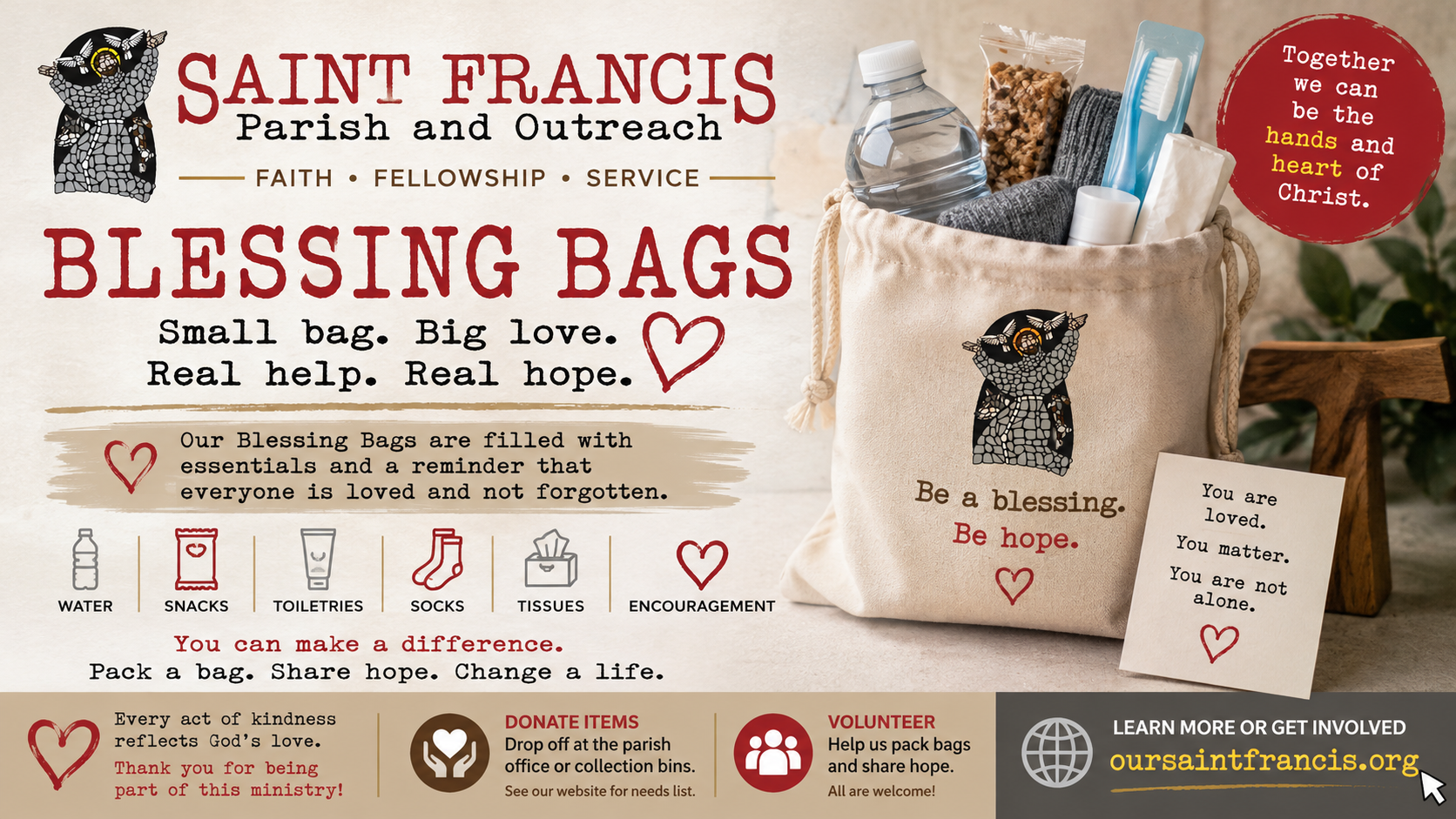
Street. A Blessing Bag handed to a neighbor who has been told to move along. A
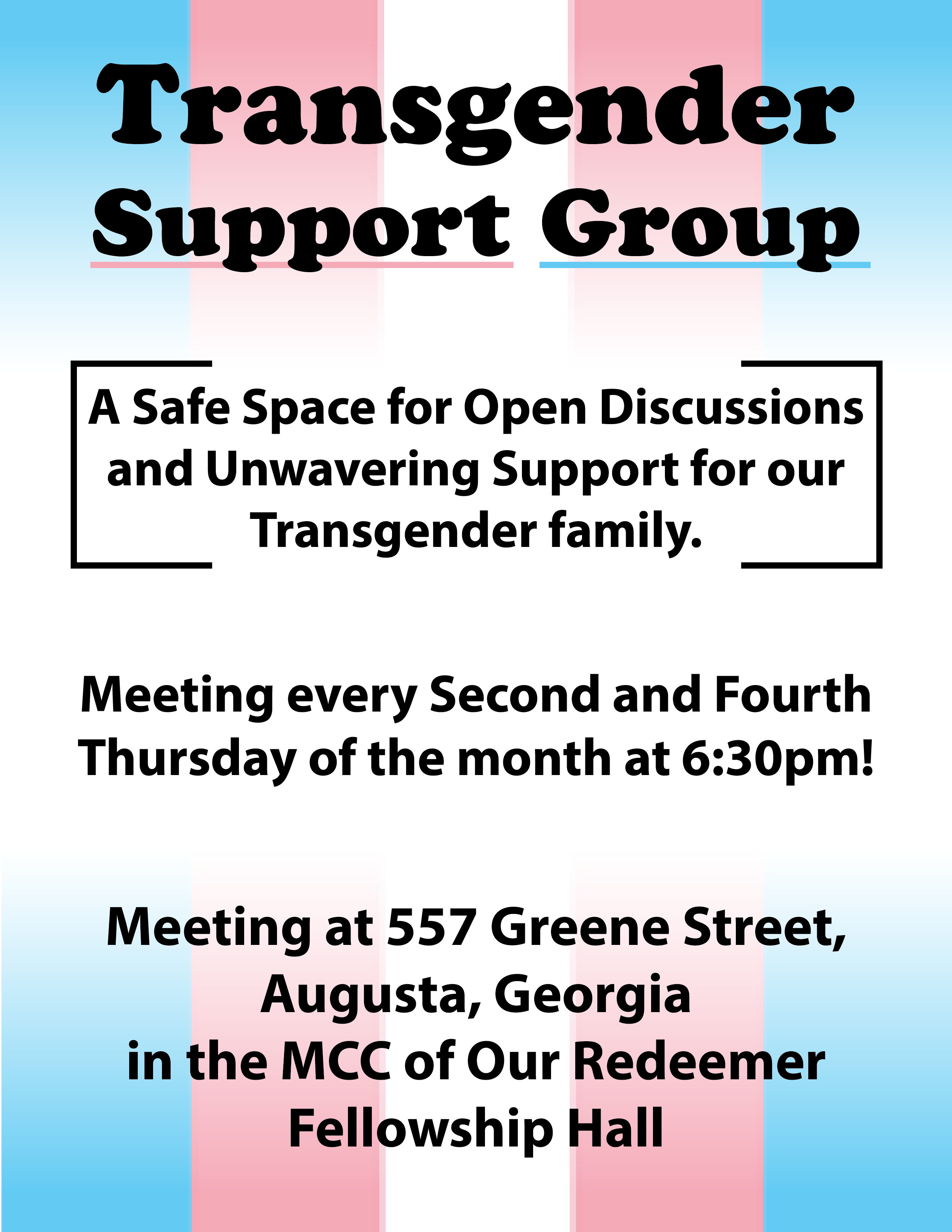
support group where transgender people are simply welcomed. An altar with no
screening at the door, because the One who set it did not screen the servants’
catch.
Come Sunday. And if someone has used Scripture to tell
you that you do not belong at this table, I want you to hear the other reading,
the one actually in the text. The chains are cast down. The tears are taken
from every face. The hall is filled with whoever the servants could find. You
were found. Come in. Pax et Bonum!
Bishop Greer
|